Compressed Air Systems Design
Industrial and commercial compressed air systems engineered for consistent pressure, clean dry air and minimal...
DetailsDesign, installation supervision and commissioning of medical gas pipeline systems and LPG reticulation for hospitals, hotels, residences and industry — engineered for safety, continuity and full regulatory compliance.
Medical gas and LPG systems sit at the sharp end of building services. One delivers oxygen, medical air and vacuum to patients; the other fuels kitchens, laundries, water heating and process plant. Both are life-safety systems. Both demand disciplined design, careful installation and rigorous testing before a single valve is opened. TechMEPi Engineering designs and supervises medical gas pipeline systems and LPG installations for hospitals, hotels, residential developments, commercial buildings and industrial facilities across East Africa and the Indian Ocean region.
We engineer complete systems from source to terminal unit: oxygen, medical air, medical vacuum, nitrous oxide and anaesthetic gas scavenging. Design begins with a departmental gas schedule — which wards, theatres and treatment rooms need which gases, and at what diversified flow. From there we size manifold rooms and cylinder banks, plan standby capacity, and route degreased copper pipework through the building with zone valves, area valve service units, pressure alarms and clearly identified isolation points. Every decision protects one outcome: uninterrupted supply at the correct pressure and purity, at every bedhead, pendant and theatre panel.
For LPG we engineer the full chain: bulk tank or cylinder-bank storage, first- and second-stage regulation, vaporisers where the duty demands them, buried and surface pipework, gas trains, leak detection and emergency shut-off. Siting distances, ventilation and tanker access are assessed at design stage, so the installation satisfies regulatory scrutiny rather than fighting it. Typical applications include hotel and hospital kitchens, commercial laundries, hot water plant and centralised reticulation serving individual apartments in residential developments.
Depending on the commission, deliverables include design reports and calculations, schematics and coordinated layouts, specifications and bills of quantities for tender, evaluation of contractor proposals, full-time or periodic site supervision, witnessed testing and commissioning, as-installed drawings and operation and maintenance documentation. For existing facilities we carry out condition surveys and upgrade designs — a common need where hospitals have grown faster than their gas infrastructure.
Medical gas systems are designed to the principles of HTM 02-01 and ISO 7396-1, covering system design, installation, validation and verification. LPG installations are designed to recognised codes such as NFPA 58 alongside the regulatory requirements of each country we work in, including EPRA requirements in Kenya. With 18+ years of building services experience and PE and PMP certified leadership, we treat compliance as the starting point of the design, not a box ticked at handover.
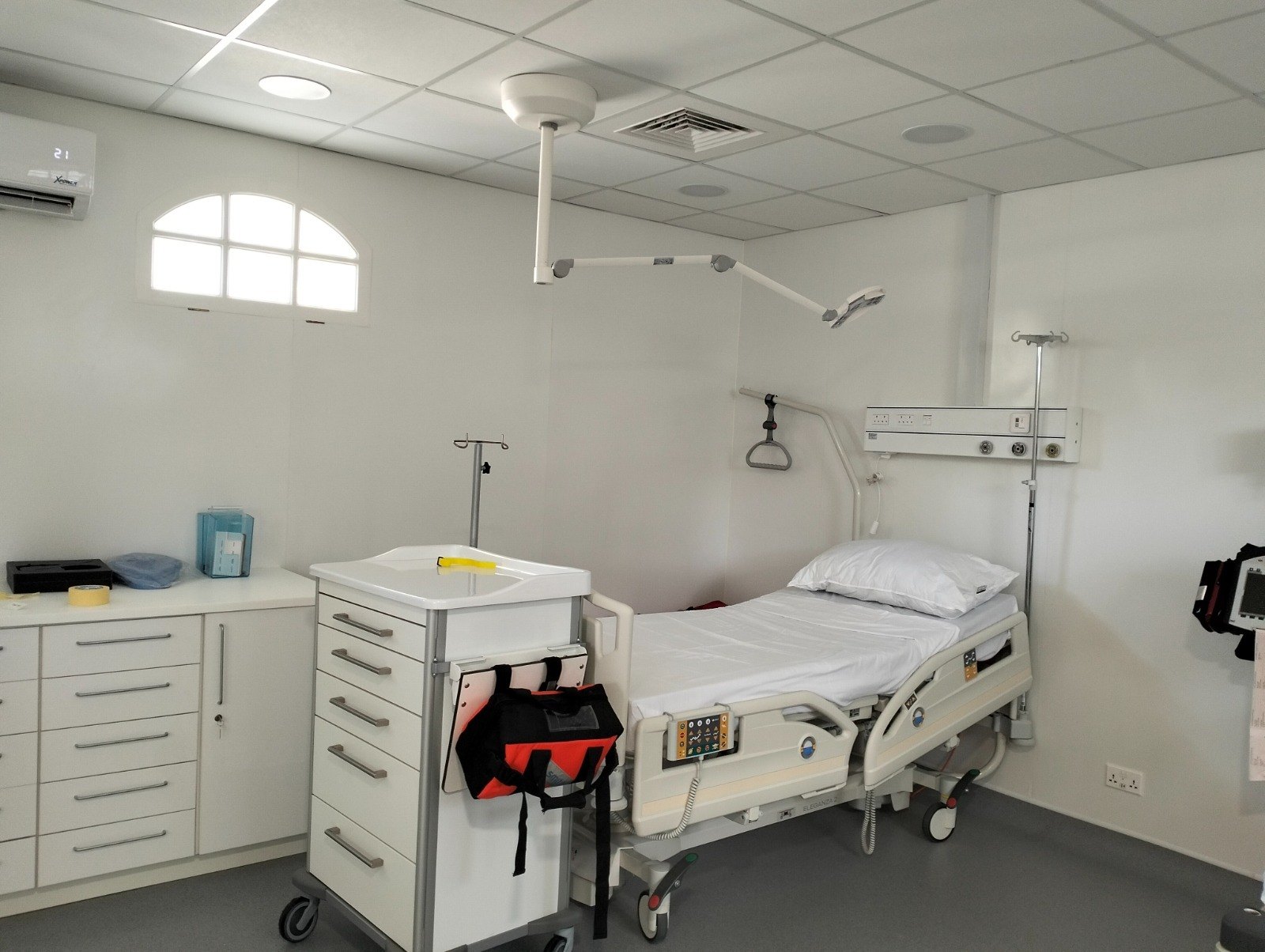
Yes. Upgrades and extensions on operating hospitals are planned around zone valves, temporary supplies and out-of-hours tie-ins so clinical areas keep their gas supply throughout. Every isolation is planned with the hospital's engineering and clinical teams, and every affected section is pressure tested and purged before it returns to service.
No — we are the engineering designer and supervisor, independent of any gas supplier. We design the storage, manifolds, regulation and pipework, then coordinate the supplier's requirements — cylinder or bulk deliveries, tank siting, telemetry — into the design. That independence means the system is sized for your demand, not a vendor's stock list.
We design to the principles of HTM 02-01 and ISO 7396-1 — the internationally recognised references for medical gas pipeline systems — alongside each country's health facility requirements. That covers pipe materials and cleaning, valve zoning, alarm provision, and the testing and commissioning sequence. Installations are pressure tested, purged and witnessed before any gas reaches a patient outlet.
Yes, and it is increasingly the preferred arrangement for residential developments. A central bulk tank or cylinder bank feeds a regulated, metered network serving each apartment — safer and more convenient than loose cylinders in kitchens. The design covers tank siting distances, ventilation, leak detection, emergency isolation and metering, and is developed to satisfy the local regulator from the outset.
Industrial and commercial compressed air systems engineered for consistent pressure, clean dry air and minimal...
DetailsComplete swimming pool engineering — filtration, circulation, disinfection, heating and plant rooms — designed...
DetailsSpecification, installation supervision and commissioning of commercial laundry and kitchen equipment — with t...
Details