Renewable Energy Systems
Solar PV, solar thermal and heat pump systems engineered for East African conditions — cutting energy costs an...
DetailsStandby generator plant and fuel transfer systems sized, designed and supervised for dependable backup power — safe fuel storage, automatic changeover and clean handover documentation.
When the grid fails, the building's standby plant becomes its lifeline. Hospitals cannot pause theatre lists. Hotels cannot ask guests to wait. Factories lose product with every minute of downtime. A standby generator installation is only as good as the engineering behind it — the sizing, the fuel system, the ventilation, the changeover logic and the testing that proves it all works under load.
TechMEPi Engineering designs and supervises generator and fuel transfer installations across commercial, industrial, hospitality, residential and healthcare projects. Our experience spans four countries, including remote and coastal environments such as the resort development in Seychelles, where standby plant must run reliably far from the nearest service depot.
Sizing comes first. We assess the connected load, starting currents of large motors and chillers, and which circuits genuinely need backup, then select prime or standby ratings accordingly. An oversized set wastes capital and runs inefficiently at low load; an undersized one trips at the worst possible moment. We size for the duty the building actually has.
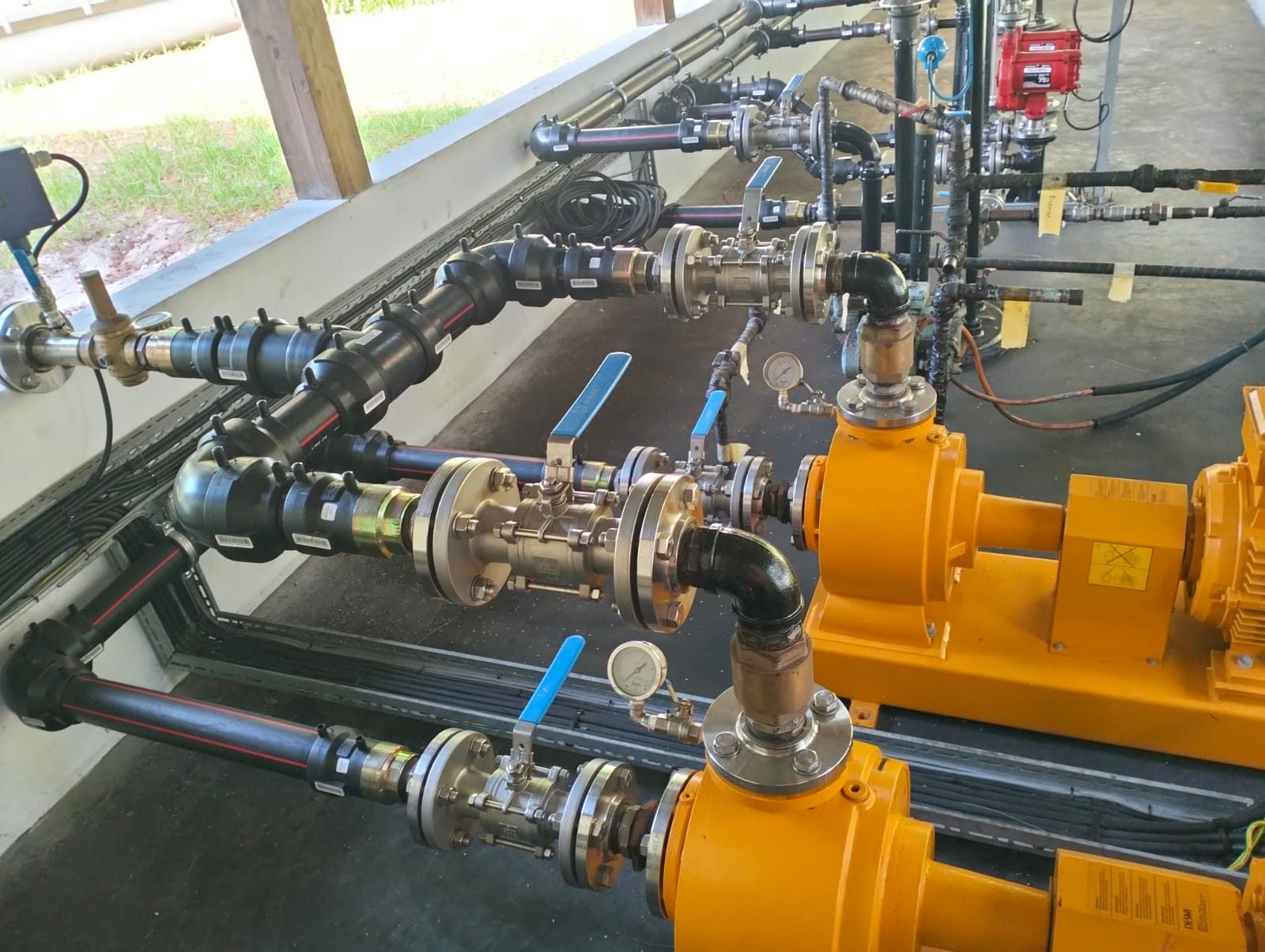
The fuel system is engineered with equal care: bulk storage tanks, day tanks, transfer pumps, piping, level controls and leak detection, with bunding and fire separation designed in from the start. Plant room design covers combustion and cooling air, exhaust routing, acoustic attenuation and vibration isolation, so the set performs to specification without disturbing occupied spaces. Changeover is coordinated with the electrical design — automatic transfer switching, load shedding where needed, and safe interaction with any solar PV or battery plant on site.
We also think beyond day one. Fuel quality varies across the region, so our designs include filtration and water separation where conditions demand it. Access for maintenance, tanker deliveries and eventual plant replacement is planned into the layout, because a generator that cannot be serviced easily will not be serviced well. Where projects sit in remote or coastal locations, equipment selection favours corrosion resistance and locally supportable brands.
Installations are designed to the principles of NFPA 110 for emergency and standby power systems and ISO 8528 for generating set ratings and performance, alongside local fire and environmental regulations governing fuel storage. Fuel systems incorporate secondary containment, fire-rated separation and emergency shut-off provisions as standard design practice.
Before handover, we witness commissioning under real or simulated load, verify changeover timing and confirm fuel transfer operates automatically across the full level range. You receive as-built drawings, test records and a maintenance schedule — so the plant that protects your building is documented, proven and ready for the first outage, not just the first invoice.
We survey the actual and projected electrical loads, identify which circuits need backup, and account for motor starting currents from lifts, pumps and chillers, which can be several times running current. From that we select an appropriate standby or prime rating with sensible margin. Oversizing wastes money and causes wet-stacking at low load; correct sizing gives reliable starts and efficient running.
It depends on your acceptable runtime and how quickly fuel can be replenished. Hospitals and remote sites typically hold more autonomy than a city office with same-day delivery. We calculate consumption at expected load, agree a target runtime with you, and design bulk storage plus day tanks to suit — with automatic transfer keeping the day tank topped up while the set runs.
Yes, when properly engineered. Our designs use bunded tanks or secondary containment sized to hold the full tank contents, fire-rated separation from occupied areas, ventilation of tank rooms, leak detection with alarms, and emergency shut-off valves. Fill points are positioned for safe tanker access with spill containment. These measures follow established international practice for fuel installations in buildings.
It can, and increasingly it should. We design the control philosophy so each source takes priority in the right order — typically solar and grid first, batteries bridging short interruptions, and the generator carrying sustained outages. Protection settings prevent inverters back-feeding the generator. Done well, this cuts generator run hours, fuel spend and servicing costs significantly over the plant's life.
Solar PV, solar thermal and heat pump systems engineered for East African conditions — cutting energy costs an...
DetailsIndependent site supervision of electrical and ICT installations — power distribution, lighting, structured ca...
DetailsEnergy-efficient air conditioning and mechanical ventilation designed for East African conditions — precise co...
Details