Plumbing & Drainage Systems
Complete domestic and commercial water supply, sanitary and stormwater drainage design — hydraulically calcula...
DetailsCentralised and decentralised hot water generation using solar thermal, heat pumps and calorifiers — sized to real demand profiles, energy-efficient and dependable at every draw-off point.
Hot water is one of the largest energy loads in hotels, hospitals and residential buildings — and one of the most visible when it fails. TechMEPi Engineering designs centralised and decentralised hot water generation systems that deliver dependable temperature at every draw-off point while keeping energy consumption firmly under control. We work across commercial, hospitality, residential and healthcare projects in Kenya and five other countries in the region, drawing on 18+ years of building services experience.
East Africa's climate is a genuine asset here. Solar thermal collectors and air-source heat pumps perform strongly in the region, and we use energy-efficient technologies such as these as the backbone of most designs — with conventional electric or calorifier-based heating as controlled backup rather than the default. The result is hot water at a fraction of the running cost of resistive heating alone.
Everything follows the demand profile. A city hotel's morning shower peak, a hospital's continuous sterilisation and washing loads and a residence's evening pattern each call for different generation and storage strategies. We profile peak flow, daily volume and recovery time, then balance generation capacity against storage so the system rides through peaks without heating water it will not use.
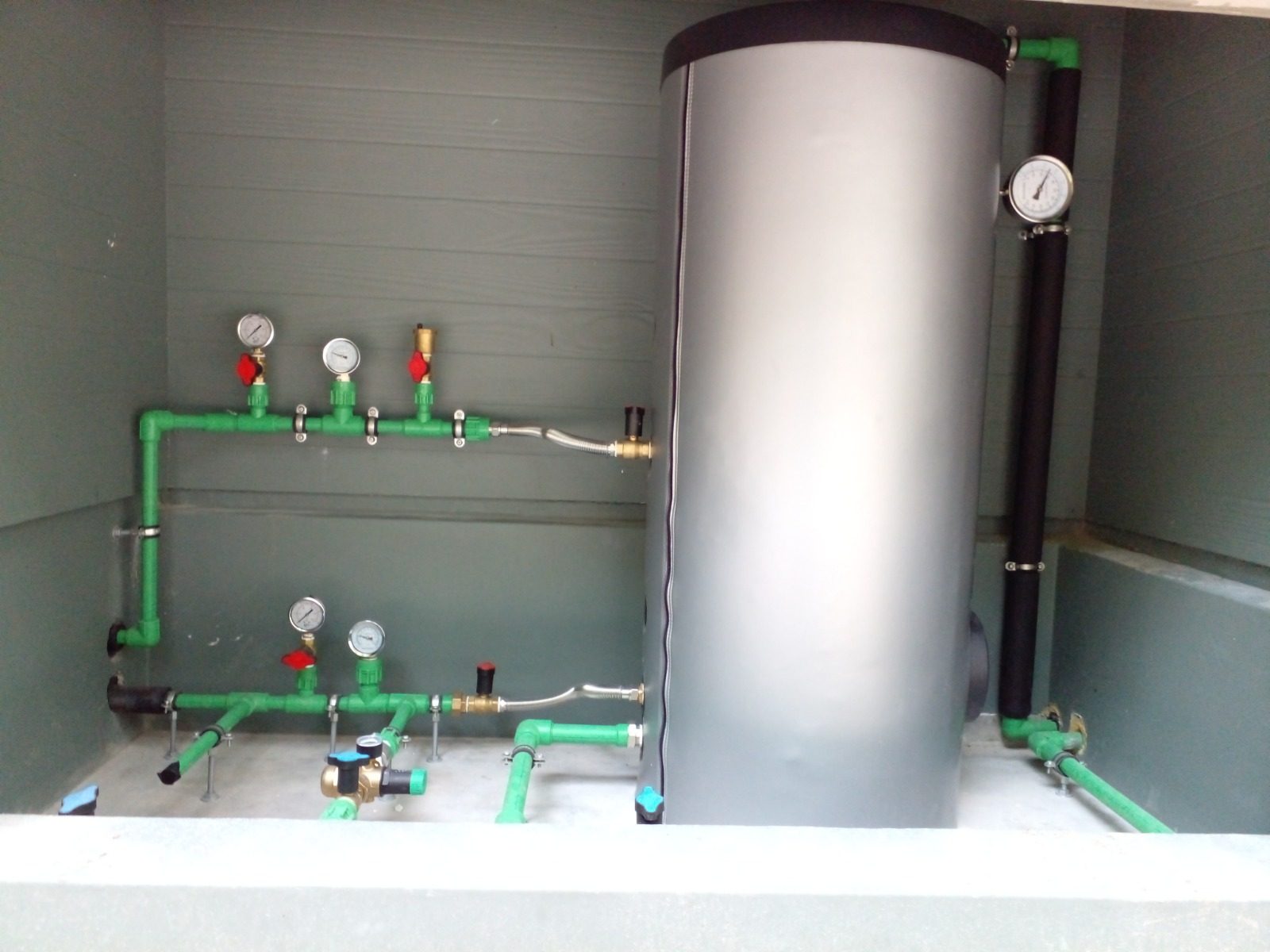
Centralised plant — solar arrays, heat pump banks, calorifiers and storage cylinders with secondary circulation — suits hotels, hospitals and apartment blocks, keeping maintenance in one plant room and delivering hot water promptly to distant outlets. Decentralised point-of-use generation suits scattered or low-demand outlets where circulation losses would outweigh the convenience. We frequently combine both in one building. Distribution is designed with insulated pipework, balanced secondary return loops and storage and circulation temperatures set in line with recognised guidance on Legionella control, so hygiene is engineered in rather than assumed. Controls and metering are specified so operators can see generation performance, storage temperatures and energy consumption at a glance — a system you can measure is a system you can keep efficient.
A typical hot water engagement includes:
Systems are designed to recognised international guidance for hot water services in buildings, including established practice on storage temperatures, circulation and Legionella risk control, and to the safety requirements applying to unvented storage — temperature and pressure relief, expansion provision and safe discharge. Solar and heat pump plant is specified to published performance standards so competing tender offers can be compared on evidence. Our own supervision of installations, including hot water plant for the resort development in Seychelles, has shaped a simple rule: design for the maintenance team, not just the commissioning day.
Often both. Solar thermal delivers very low running costs when the sun shines but needs backup for cloudy periods and high demand. Heat pumps work day and night at roughly a third of the energy of resistive heating and are less dependent on roof space. For hotels and hospitals we frequently design solar pre-heating with heat pump top-up. We model your demand profile and tariff and let the numbers decide.
From your real demand profile, not a per-person rule of thumb. We estimate peak-hour draw, daily volume and acceptable recovery time, then balance storage against generation capacity: more storage rides through sharp peaks, more generation recovers faster between them. Oversized storage wastes energy through standing losses and increases hygiene risk; undersized storage produces cold-shower complaints. The calculation takes little time and prevents both.
Long dead legs are the usual culprit — metres of pipe full of cooled water between the cylinder and the tap. Centralised systems need a balanced secondary circulation loop that keeps hot water moving close to every outlet, so the wait is seconds, not minutes. Where an outlet is too remote to justify circulation, point-of-use generation is the better answer. We design this in from the start; retrofitting it is far costlier.
In most cases, yes, and the savings are usually substantial. We survey the existing plant, meter or estimate the current consumption, and design a heat pump or solar retrofit that reuses sound storage and pipework where possible. Payback for heat pump conversions on high-demand buildings such as hotels is often short because resistive heating is the most expensive way to make hot water. You receive the projected figures before committing.
Complete domestic and commercial water supply, sanitary and stormwater drainage design — hydraulically calcula...
DetailsPackaged and engineered sewage treatment plants for developments beyond the sewer network — sized, specified a...
DetailsReverse osmosis and multi-stage water treatment systems that turn borehole, municipal or brackish supplies int...
Details