Air Conditioning & Mechanical Ventilation
Energy-efficient air conditioning and mechanical ventilation designed for East African conditions — precise co...
DetailsFire hydrant, sprinkler, hose reel and portable equipment systems engineered to international safety standards — rapid, reliable response that protects people, property and business continuity.
Fire protection is engineering with no margin for optimism. TechMEPi Engineering designs and supervises water-based fire protection systems — hydrants, automatic sprinklers, hose reels and portable firefighting equipment — for commercial, industrial, hospitality, residential and healthcare buildings across East Africa and the Indian Ocean region. Our systems are engineered to international safety standards and to the requirements of local fire authorities, with one objective: rapid, effective response the moment it is needed.
With 18+ years in building services, we have seen that fire systems fail for predictable reasons — inadequate water storage, undersized pumps, poor hydraulic design and installations that were never properly tested. Our role is to remove every one of those failure modes before handover.
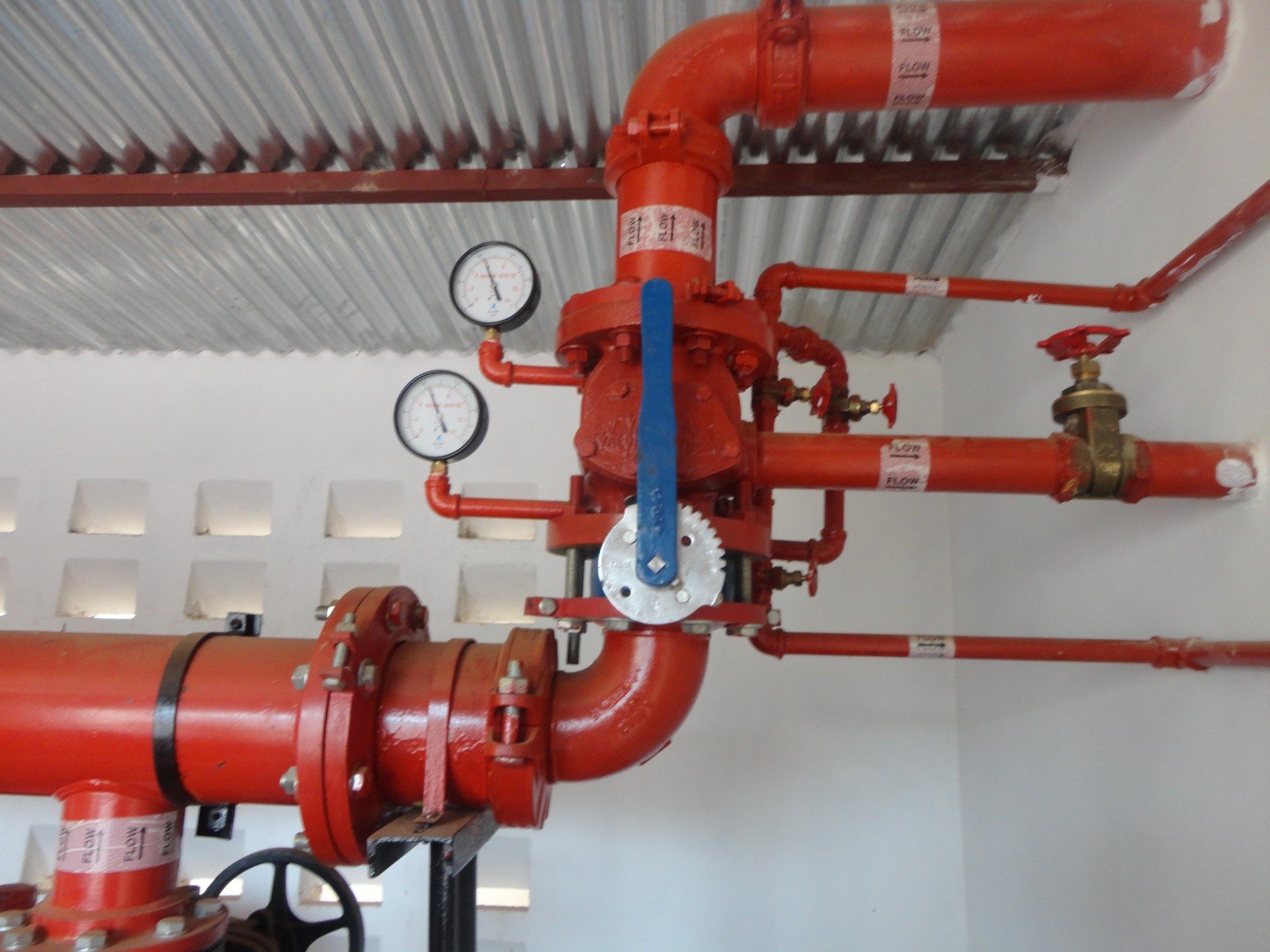
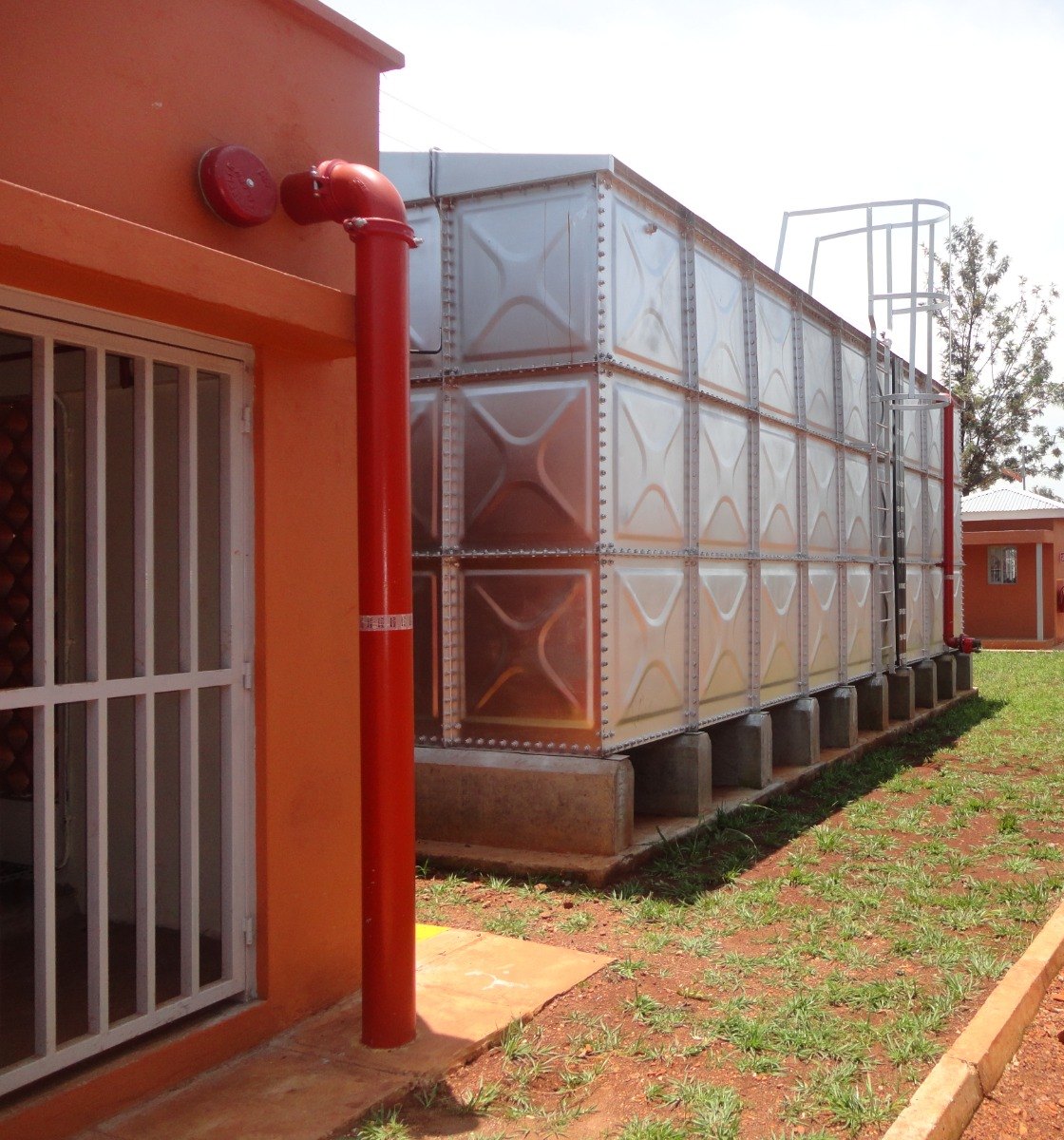
Design begins with hazard classification. Occupancy, contents, storage heights and construction determine the hazard category, which in turn sets sprinkler densities, hydrant coverage and water demand. We then engineer the water supply as a system: dedicated fire storage, duty and standby fire pumps with a jockey pump to hold pressure, and distribution mains hydraulically calculated to deliver the required flow and pressure at the most remote point — not just at the pump house.
Sprinkler layouts, hydrant and landing valve positions, hose reel coverage and portable extinguisher schedules are developed together so coverage is complete without duplication. All pipework is coordinated in Autodesk Revit with structure and other services, keeping sprinkler heads where the calculations put them rather than where site convenience pushes them. During construction we inspect installation quality, witness pressure tests and flow tests, and confirm the completed system performs to its design figures.
Reliability also depends on what surrounds the system. We coordinate fire pump power supplies and standby generation with the electrical design, make sure pump rooms are accessible and ventilated, and provide the zone drawings and signage that help a responding fire brigade act quickly. Small details defeat good hydraulics — an unmonitored valve left closed, a hydrant blocked by parking — so on our projects those details are specified and checked, not assumed.
A typical fire protection engagement includes:
Our fire protection designs follow recognised international standards — including NFPA guidance for sprinkler systems, standpipe and hose systems, and stationary fire pumps — applied alongside the local fire authority and insurance requirements of each project's jurisdiction. Documentation is prepared to support statutory approvals and insurer review. We design to standards rather than around them, because a fire system is only worth building if it will work on the one day it must.
It depends on the building's size, height, occupancy and what local regulations and your insurer require. Hose reels and extinguishers support first-aid firefighting by occupants; sprinklers control a fire automatically, whether or not anyone is present. Warehouses, hotels, hospitals and high-rise buildings typically warrant sprinklers. We assess your building against the applicable standards and give you a clear, justified recommendation rather than a generic answer.
Enough to run the system at full design flow for the duration the standards require for your hazard class — commonly 30 to 90 minutes, with higher hazards needing more. That calculation drives tank size, and it must be dedicated fire storage, not shared with domestic supply that may be empty when fire breaks out. We calculate the demand precisely, because both undersizing and oversizing carry real costs.
Usually, yes. The main challenges are water storage space, pump room location and routing pipework through a finished building. We survey the structure, model the retrofit routes in BIM, and phase installation so the building can keep operating during works. Retrofit projects are often driven by insurance conditions or a change of use — we design to satisfy both the standard and the approving authority.
Fire systems must be exercised regularly: pump starts and flow checks, valve inspections, sprinkler head condition, hose reel operation and extinguisher servicing on scheduled intervals. At handover we provide testing and maintenance schedules aligned with recognised standards, plus as-built drawings and commissioning records your maintenance contractor needs. A system that is not tested routinely should be assumed not to work — we make routine testing straightforward.
Energy-efficient air conditioning and mechanical ventilation designed for East African conditions — precise co...
DetailsComplete domestic and commercial water supply, sanitary and stormwater drainage design — hydraulically calcula...
DetailsCentralised and decentralised hot water generation using solar thermal, heat pumps and calorifiers — sized to...
Details